
Stone Cleaning & Restoration in Swansea
Stone Cleaning & Restoration in Swansea for offices, retail, residential blocks, schools and public buildings — surveyed, test-cleaned and priced in writing before any work starts.
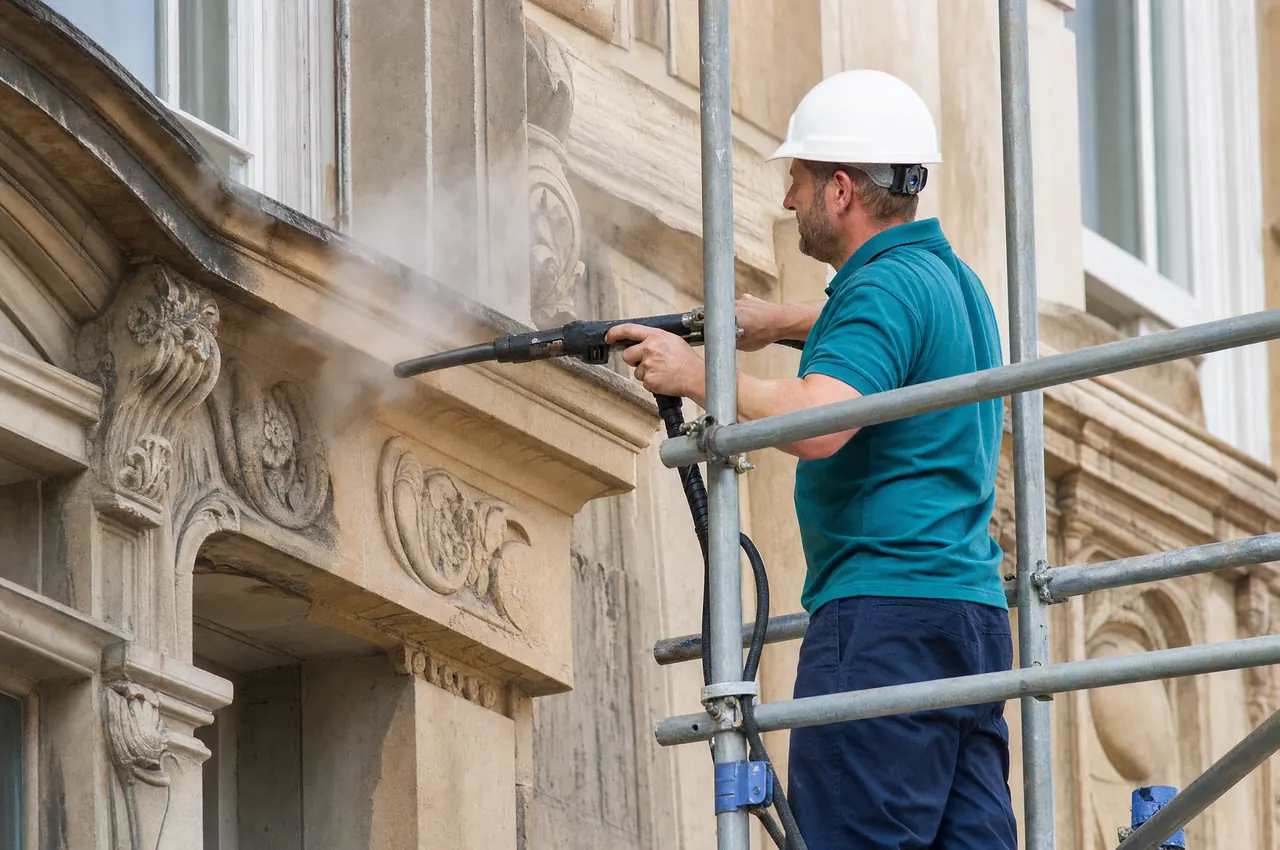
Stone cleaning removes black crusts, carbon soiling, biological growth and staining from natural stone using conservation-grade methods — mainly superheated steam (DOFF) and gentle wet vortex cleaning (TORC). Stone is softer and more varied than brick, so methods and pressures are set per stone type and tested before any full clean.
Stone Cleaning & Restoration across Swansea
High rainfall means green growth returns faster on render and shaded masonry — so in Swansea we see a lot of stone-built terraces, rendered and painted villas, chapels and modern business-park units. Each gets its own method and a test panel first.
- Poultice treatments draw out deep-seated stains such as rust, oil and copper run-off.
- Each stone type is identified and test-cleaned; we photograph the trial panel for your approval.
- For listed buildings we can supply method statements to support listed building consent.
- DOFF steam removes biological growth and most soiling without water saturation or abrasion.
Stone Cleaning & Restoration prices in Swansea
Typical rates in Swansea are around £11.2–£27.9 per m² of facade + VAT. A job of about 200 m² of facade would typically be £2,700–£6,700 + VAT including access.
Towns we cover in Swansea
FAQs
Will cleaning remove the stone's patina?
Our aim is to remove harmful soiling, not to make stone look brand new. Settings are chosen to keep the stone's surface and natural patina wherever possible.
How often should stone be cleaned?
Typically every 10 to 15 years for most stone buildings, more often in heavy traffic or coastal locations. Regular light cleaning is better for stone than rare aggressive cleaning.
Do you cover all of Swansea?
Yes. We carry out stone cleaning & restoration across Swansea, including Swansea, Gorseinon, Clydach.
Book a free facade survey in Swansea
Test panel, method statement and a fixed written quote — no obligation.