
Stone Cleaning & Restoration in Bridgend
Stone Cleaning & Restoration across Bridgend, Bridgend: safe access, controlled run-off and dated before-and-after photos of every elevation we clean.
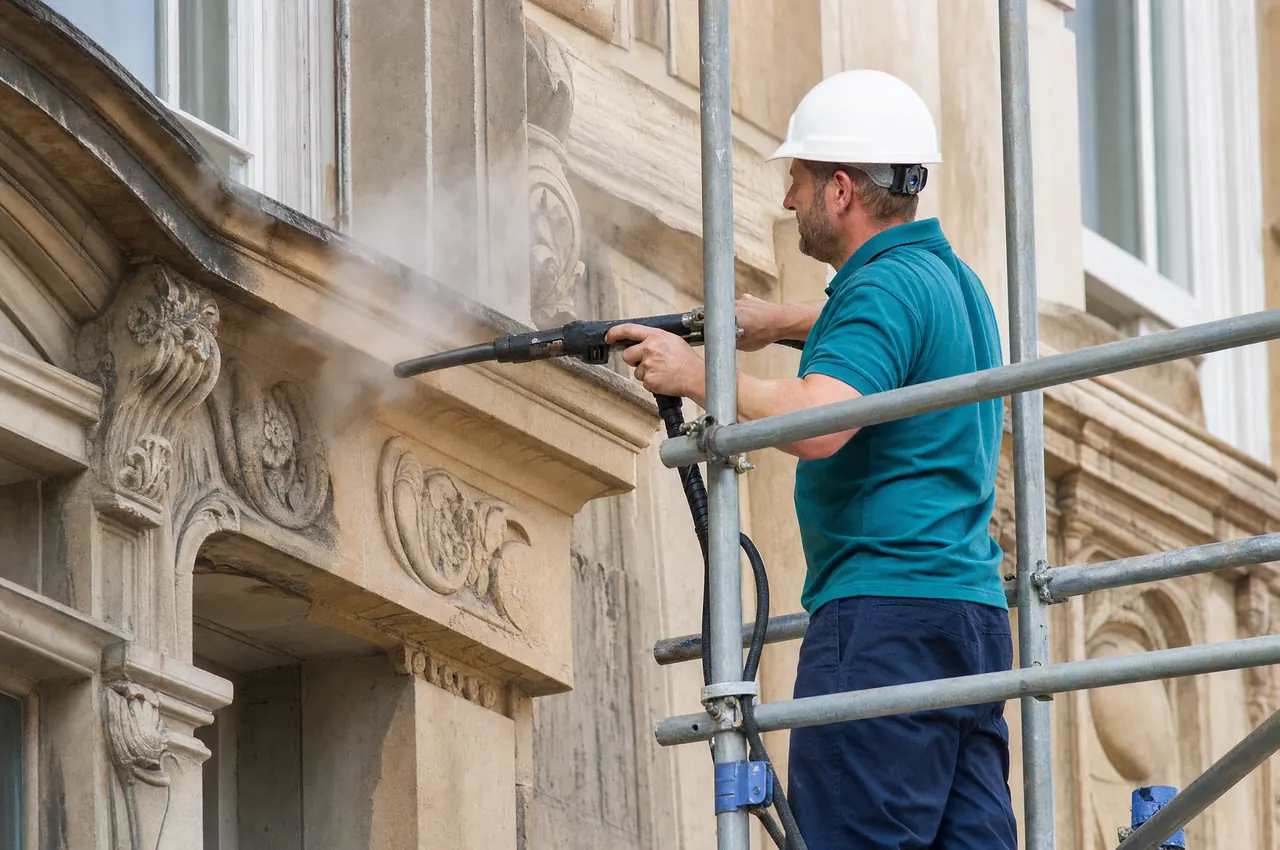
Stone cleaning removes black crusts, carbon soiling, biological growth and staining from natural stone using conservation-grade methods — mainly superheated steam (DOFF) and gentle wet vortex cleaning (TORC). Stone is softer and more varied than brick, so methods and pressures are set per stone type and tested before any full clean.
Stone Cleaning & Restoration across Bridgend
High rainfall means green growth returns faster on render and shaded masonry — so in Bridgend we see a lot of stone-built terraces, rendered and painted villas, chapels and modern business-park units. Each gets its own method and a test panel first.
- DOFF steam removes biological growth and most soiling without water saturation or abrasion.
- Each stone type is identified and test-cleaned; we photograph the trial panel for your approval.
- Poultice treatments draw out deep-seated stains such as rust, oil and copper run-off.
- TORC low-pressure vortex is used on stubborn black crusts, at the gentlest effective setting.
Stone Cleaning & Restoration prices in Bridgend
Typical rates in Bridgend are around £11.2–£27.9 per m² of facade + VAT. A job of about 200 m² of facade would typically be £2,700–£6,700 + VAT including access.
Towns we cover in Bridgend
FAQs
Will cleaning remove the stone's patina?
Our aim is to remove harmful soiling, not to make stone look brand new. Settings are chosen to keep the stone's surface and natural patina wherever possible.
How often should stone be cleaned?
Typically every 10 to 15 years for most stone buildings, more often in heavy traffic or coastal locations. Regular light cleaning is better for stone than rare aggressive cleaning.
Do you cover all of Bridgend?
Yes. We carry out stone cleaning & restoration across Bridgend, including Bridgend, Coity, Maesteg, Porthcawl, Pyle.
Book a free facade survey in Bridgend
Test panel, method statement and a fixed written quote — no obligation.