
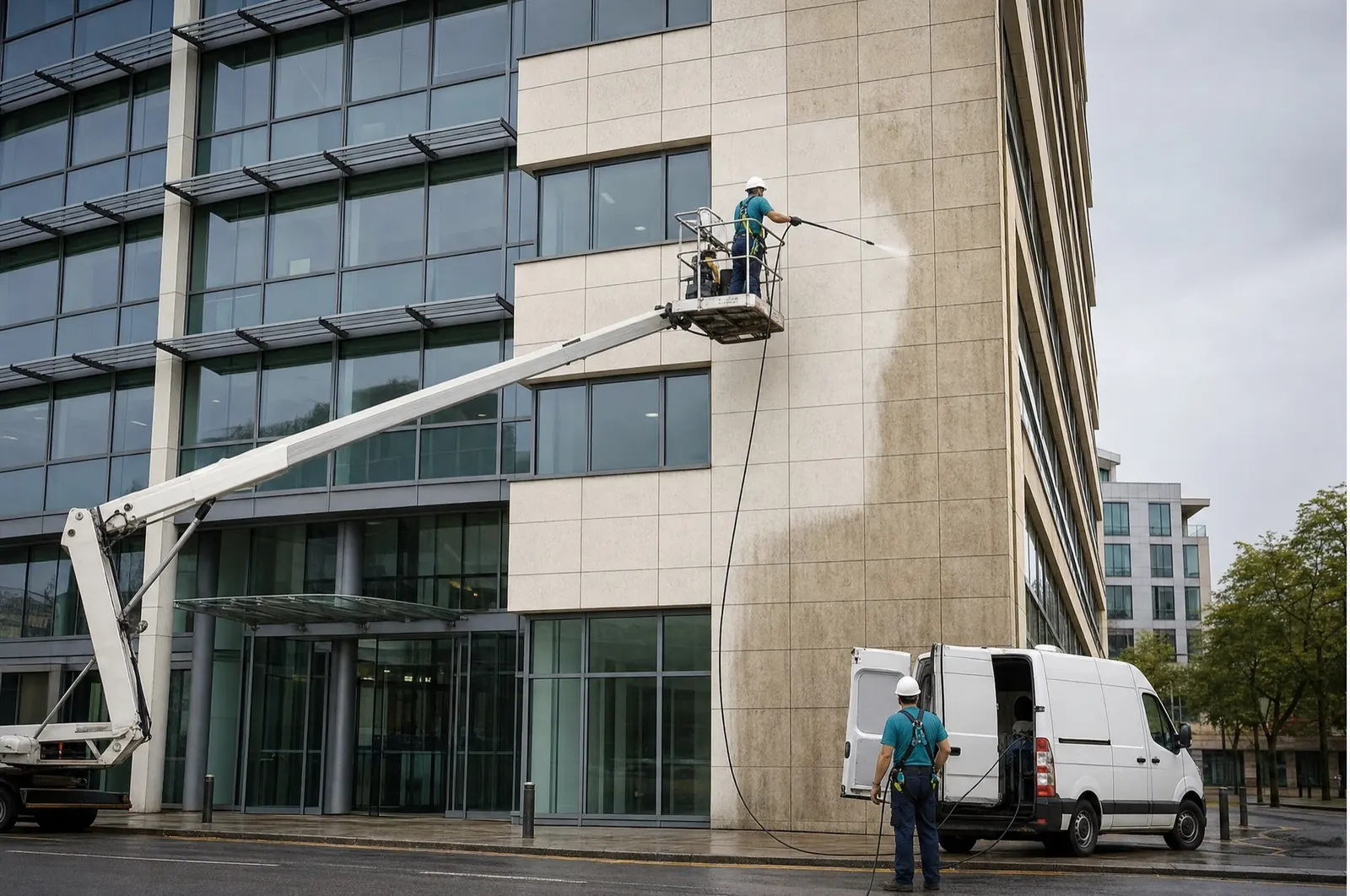
The difference in one line
Pressure washing uses force to remove dirt; soft washing uses a biocide and low pressure to kill growth and let it rinse away. Pressure washing suits hard, robust surfaces; soft washing suits render, painted walls, timber and roofs.
When to soft wash
Choose soft washing for silicone, acrylic and monocouche render, external wall insulation, painted masonry, timber cladding and most roofs. These surfaces can be marked, eroded or have their warranties voided by high pressure, and the growth on them needs killing, not just removing.
When to pressure wash
Pressure washing — ideally with hot water — suits concrete, engineering brick, blockwork, plinths and paving, and is good for grease, gum and traffic film. Pressure and nozzle should still be set after a test patch.
When neither is right
Soft or historic brick and natural stone are best cleaned with superheated low-pressure steam (DOFF) or a gentle wet vortex (TORC). These remove soiling with heat or fine abrasion at very low pressure, protecting the fired face of the brick and the surface of the stone.
Our approach
We test-clean before committing to any method, and our written quotes state the method for each surface.
Last updated 18 November 2026.