
Graffiti Removal in Dumfries and Galloway
Graffiti Removal in Dumfries and Galloway for offices, retail, residential blocks, schools and public buildings — surveyed, test-cleaned and priced in writing before any work starts.
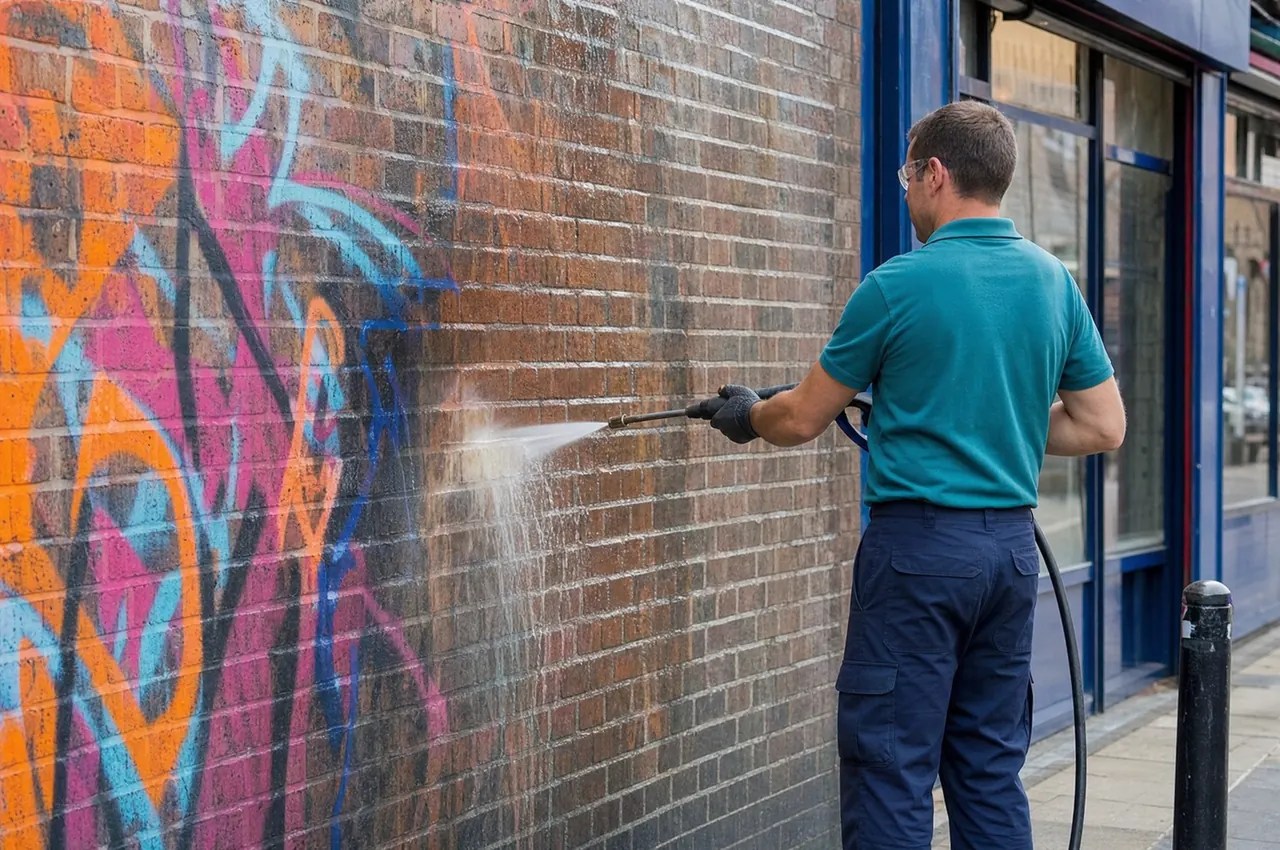
Graffiti removal takes spray paint, marker pen and etching off building surfaces using surface-matched removers, hot-water pressure washing or steam, then neutralises and rinses. Removing graffiti quickly matters: fresh paint lifts more easily and fully, and fast removal is shown to discourage repeat tagging.
Graffiti Removal across Dumfries and Galloway
Wet weather and shaded streets encourage algae and black staining on sandstone — so in Dumfries and Galloway we see a lot of sandstone tenements, granite civic buildings, harled and rendered homes and modern clad offices. Each gets its own method and a test panel first.
- Smooth surfaces — shutters, metal, glass — are cleaned with gentler solvents and hand work.
- Removers are matched to both the paint and the surface, and tested before use.
- Offensive graffiti can be prioritised for same-day or next-day attendance where available.
- Hot water and steam lift paint from porous brick and stone without abrasive blasting.
Graffiti Removal prices in Dumfries and Galloway
Typical rates in Dumfries and Galloway are around £14.2–£28.5 per m² of facade + VAT. A job of about 200 m² of facade would typically be £3,800–£7,980 + VAT including access.
Towns we cover in Dumfries and Galloway
FAQs
Will there be a shadow left?
On smooth surfaces, rarely. On porous brick or stone, a faint shadow can remain, which we treat with poultices. Fast removal greatly reduces the risk.
How quickly can you remove graffiti?
We aim to attend offensive graffiti as a priority, often within one to two working days depending on location. Planned contracts can set a fixed response time.
Do you cover all of Dumfries and Galloway?
Yes. We carry out graffiti removal across Dumfries and Galloway, including Dumfries.
Book a free facade survey in Dumfries and Galloway
Test panel, method statement and a fixed written quote — no obligation.