
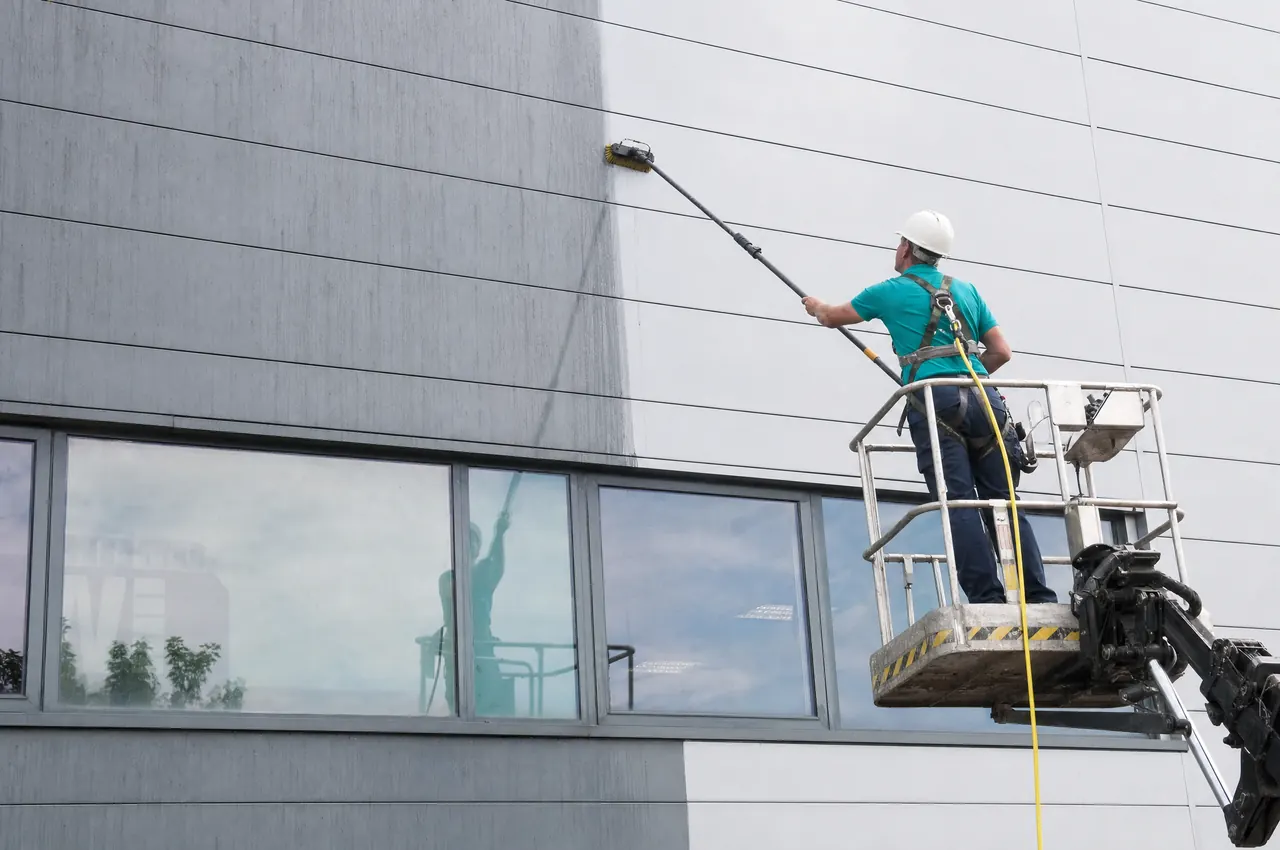
Cladding Cleaning in County Armagh
Cladding Cleaning across County Armagh, County Armagh: safe access, controlled run-off and dated before-and-after photos of every elevation we clean.
Cladding cleaning removes traffic film, algae, oxidation residue and bird fouling from rainscreen and profile cladding using pure water, soft brushes and pH-neutral detergents. Regular cleaning is often a condition of the cladding manufacturer's finish warranty, which can require cleaning every six to twelve months depending on the environment.
Cladding Cleaning across County Armagh
Mild, wet weather encourages algae and lichen on render and north-facing walls — so in County Armagh we see a lot of red brick terraces, rendered homes, sandstone civic buildings and modern clad offices. Each gets its own method and a test panel first.
- Panel joints, flashings and drip edges are cleaned so dirt does not streak back down the facade.
- Soft brushes and pH-neutral cleaners lift traffic film without scratching powder-coat or PVDF.
- Cleaning frequency and products follow the coating manufacturer's warranty guidance.
- Timber and thermowood are cleaned with oxygen-based cleaners, never high pressure.
Cladding Cleaning prices in County Armagh
Typical rates in County Armagh are around £2.7–£7.2 per m² of facade + VAT. A job of about 200 m² of facade would typically be £760–£1,980 + VAT including access.
Towns we cover in County Armagh
FAQs
Can you clean cladding at height?
Yes — by water-fed pole up to around 20 metres, by MEWP on most low and mid-rise buildings, and by rope access or cradle on high-rise.
How often should cladding be cleaned?
Many coating manufacturers specify cleaning every 6 to 12 months in urban, industrial or coastal areas, and at least yearly elsewhere, to keep the finish warranty valid. We can set up a planned programme.
Do you cover all of County Armagh?
Yes. We carry out cladding cleaning across County Armagh, including Craigavon, Portadown, Newry, Armagh.
Book a free facade survey in County Armagh
Test panel, method statement and a fixed written quote — no obligation.