
Anti-Graffiti & Protective Coatings in Midlothian
Anti-Graffiti & Protective Coatings across Midlothian, Midlothian: safe access, controlled run-off and dated before-and-after photos of every elevation we clean.
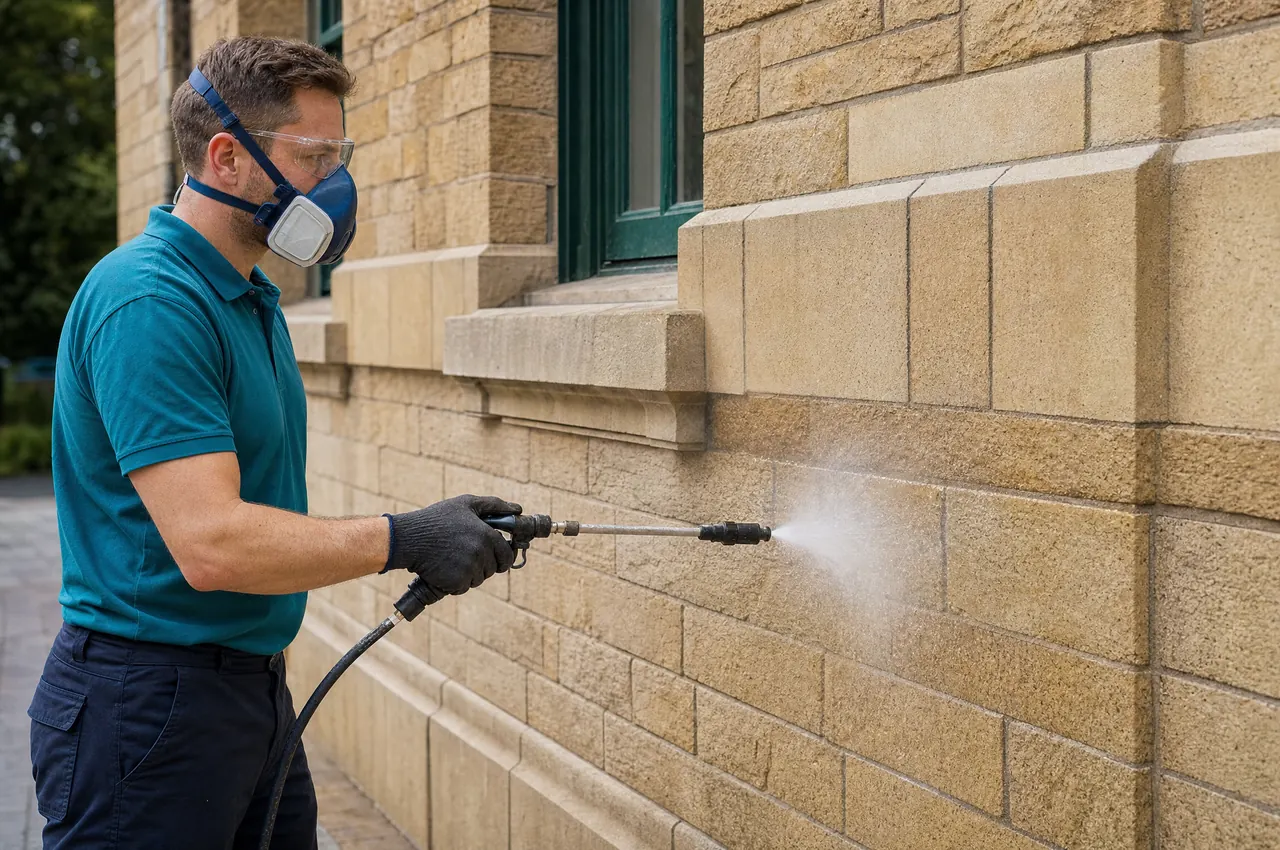
Protective facade coatings are clear treatments applied to a cleaned surface to keep it clean for longer. Breathable water repellents reduce water uptake and green growth, anti-algae treatments slow re-growth on render, and anti-graffiti coatings — sacrificial or permanent — let paint be washed off without damaging the surface underneath.
Anti-Graffiti & Protective Coatings across Midlothian
Wet weather and shaded streets encourage algae and black staining on sandstone — so in Midlothian we see a lot of sandstone tenements, granite civic buildings, harled and rendered homes and modern clad offices. Each gets its own method and a test panel first.
- Test areas confirm there is no change in colour or sheen before full application.
- We record products, batch numbers and areas treated for your maintenance file.
- Sacrificial anti-graffiti coatings suit heritage stone; permanent ones suit modern surfaces.
- Low-pressure spray and brush application gives even coverage without runs.
Anti-Graffiti & Protective Coatings prices in Midlothian
Typical rates in Midlothian are around £4.8–£11.4 per m² of facade + VAT. A job of about 200 m² of facade would typically be £1,190–£2,850 + VAT including access.
Towns we cover in Midlothian
FAQs
How long does a water-repellent last?
Typically five to ten years, depending on the product, exposure and surface. Anti-algae treatments generally need renewing every one to two years on shaded walls.
Do coatings stop walls breathing?
The masonry treatments we use are vapour-permeable — they stop liquid water getting in while letting water vapour out, which is essential for brick and stone.
Do you cover all of Midlothian?
Yes. We carry out anti-graffiti & protective coatings across Midlothian, including Bonnyrigg, Penicuik, Mayfield, Dalkeith.
Book a free facade survey in Midlothian
Test panel, method statement and a fixed written quote — no obligation.