
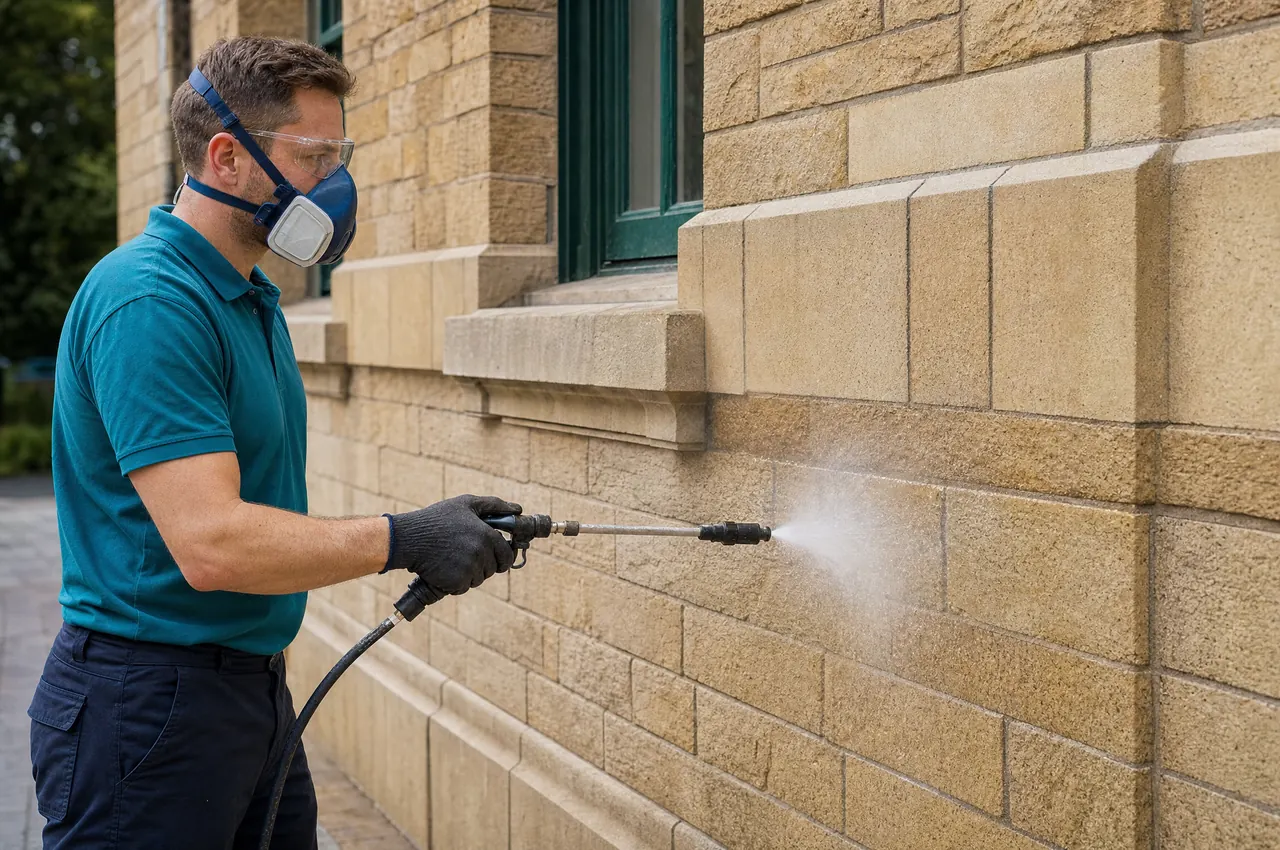
Anti-Graffiti & Protective Coatings in Gwynedd
From high-street frontages to multi-storey blocks, we provide anti-graffiti & protective coatings throughout Gwynedd (LL57 and surrounding districts) with fixed written quotes.
Protective facade coatings are clear treatments applied to a cleaned surface to keep it clean for longer. Breathable water repellents reduce water uptake and green growth, anti-algae treatments slow re-growth on render, and anti-graffiti coatings — sacrificial or permanent — let paint be washed off without damaging the surface underneath.
Anti-Graffiti & Protective Coatings across Gwynedd
High rainfall means green growth returns faster on render and shaded masonry — so in Gwynedd we see a lot of stone-built terraces, rendered and painted villas, chapels and modern business-park units. Each gets its own method and a test panel first.
- Low-pressure spray and brush application gives even coverage without runs.
- Coatings are only applied to fully cleaned, dry surfaces, so dirt is not sealed in.
- Sacrificial anti-graffiti coatings suit heritage stone; permanent ones suit modern surfaces.
- We record products, batch numbers and areas treated for your maintenance file.
Anti-Graffiti & Protective Coatings prices in Gwynedd
Typical rates in Gwynedd are around £4.7–£11.2 per m² of facade + VAT. A job of about 200 m² of facade would typically be £1,160–£2,790 + VAT including access.
Towns we cover in Gwynedd
FAQs
Sacrificial or permanent anti-graffiti coating?
Sacrificial coatings wash off with the graffiti and are reapplied — ideal for listed or porous surfaces. Permanent coatings stay put through many cleans and suit modern, frequently targeted surfaces.
Do coatings stop walls breathing?
The masonry treatments we use are vapour-permeable — they stop liquid water getting in while letting water vapour out, which is essential for brick and stone.
Do you cover all of Gwynedd?
Yes. We carry out anti-graffiti & protective coatings across Gwynedd, including Bangor.
Book a free facade survey in Gwynedd
Test panel, method statement and a fixed written quote — no obligation.