
Anti-Graffiti & Protective Coatings in Flintshire
Anti-Graffiti & Protective Coatings across Flintshire, Flintshire: safe access, controlled run-off and dated before-and-after photos of every elevation we clean.
Protective facade coatings are clear treatments applied to a cleaned surface to keep it clean for longer. Breathable water repellents reduce water uptake and green growth, anti-algae treatments slow re-growth on render, and anti-graffiti coatings — sacrificial or permanent — let paint be washed off without damaging the surface underneath.
Anti-Graffiti & Protective Coatings across Flintshire
High rainfall means green growth returns faster on render and shaded masonry — so in Flintshire we see a lot of stone-built terraces, rendered and painted villas, chapels and modern business-park units. Each gets its own method and a test panel first.
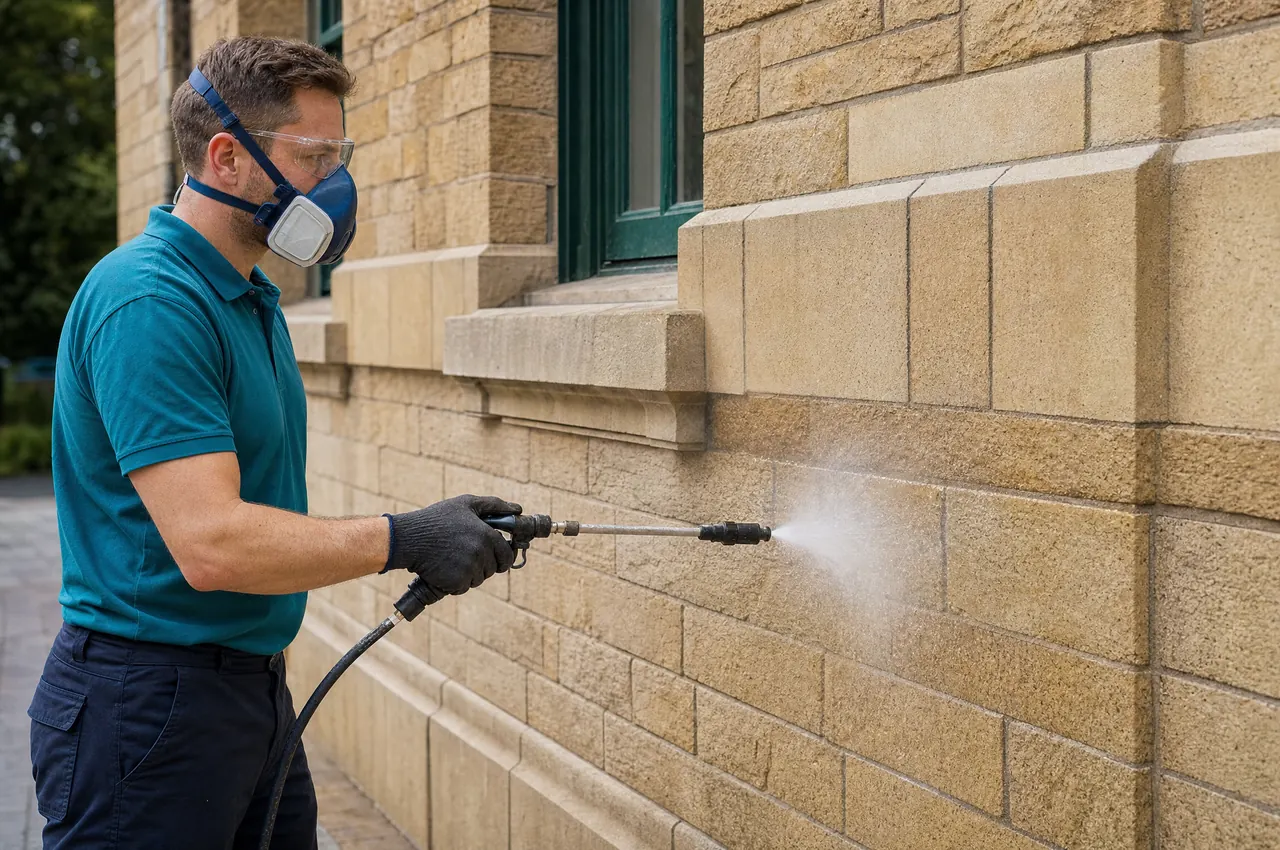
- Low-pressure spray and brush application gives even coverage without runs.
- Coatings are only applied to fully cleaned, dry surfaces, so dirt is not sealed in.
- Test areas confirm there is no change in colour or sheen before full application.
- Breathable, vapour-permeable products are used on masonry so moisture can still escape.
Anti-Graffiti & Protective Coatings prices in Flintshire
Typical rates in Flintshire are around £4.7–£11.2 per m² of facade + VAT. A job of about 200 m² of facade would typically be £1,160–£2,790 + VAT including access.
Towns we cover in Flintshire
FAQs
Do coatings stop walls breathing?
The masonry treatments we use are vapour-permeable — they stop liquid water getting in while letting water vapour out, which is essential for brick and stone.
How long does a water-repellent last?
Typically five to ten years, depending on the product, exposure and surface. Anti-algae treatments generally need renewing every one to two years on shaded walls.
Do you cover all of Flintshire?
Yes. We carry out anti-graffiti & protective coatings across Flintshire, including Buckley, Deeside, Flint, Hawarden.
Book a free facade survey in Flintshire
Test panel, method statement and a fixed written quote — no obligation.